What is MCS Accreditation?
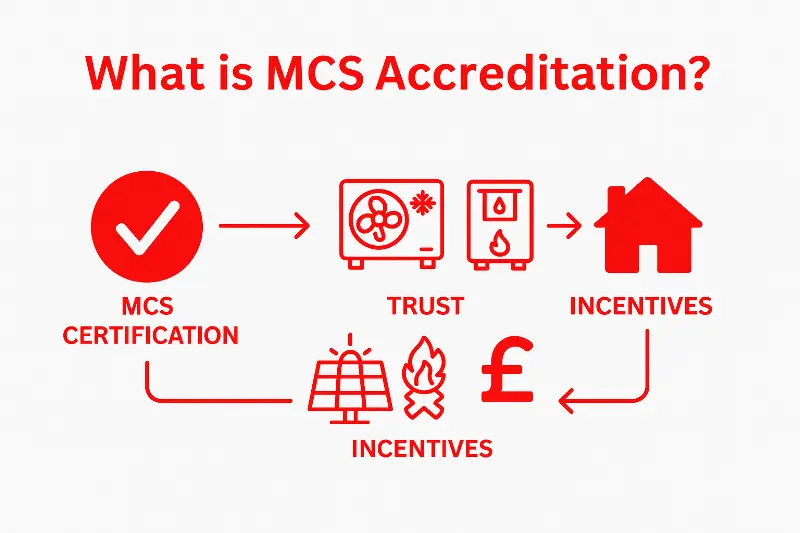
MCS accreditation (Microgeneration Certification Scheme) is a UK quality assurance standard that certifies low-carbon technology installers and products—like solar panels and heat pumps—ensuring they meet defined performance and safety standards. For businesses in the renewables sector, holding this certification is essential to gain consumer trust, comply with regulations, and access government incentives.
What Does MCS Accreditation Mean?
Holding MCS accreditation shows that your business meets nationally recognised standards for renewable technology installation.
- Confirms that installers are qualified and competent
- Ensures installations use approved products and follow best practice
- Strengthens your marketing credentials
Ultimately, MCS accreditation delivers peace of mind for both installers and consumers alike.
Why is MCS Accreditation Important?
Access to Government Incentives
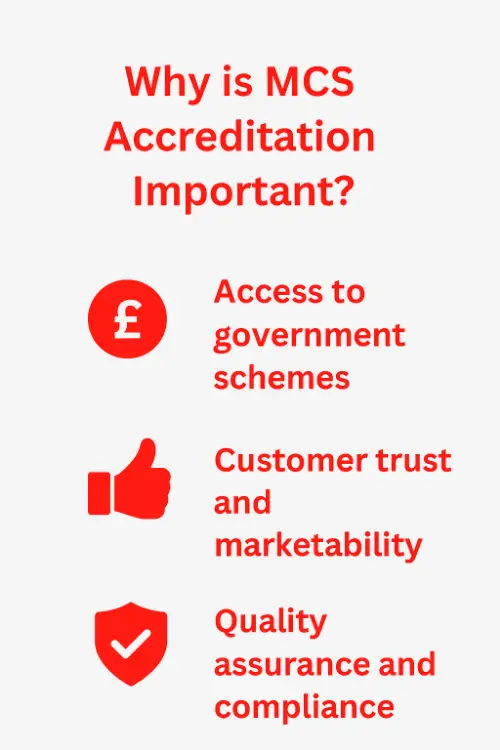
MCS certification enables eligibility for government-backed schemes such as the Smart Export Guarantee (SEG), helping customers financially benefit from their green energy systems.
- Qualifies consumers for government incentives and export tariffs
- Demonstrates quality, reliability, and commitment to compliance
- Builds credibility with customers, housing developers, and councils
By obtaining MCS accreditation, installers position themselves as trustworthy, skilled professionals in a growing renewable sector.
Enhanced Market Credibility
Gaining MCS accreditation boosts your company’s professional image and positions you as a trusted installer in the renewable energy market. Customers are more likely to choose certified installers who meet recognised standards of quality and safety.
- Builds trust with domestic and commercial clients
- Improves lead generation and conversion rates
- Enhances your standing with suppliers and government schemes
In a competitive sector, this enhanced credibility can make a meaningful difference in winning contracts and customer loyalty.
Commitment to Quality
MCS certification reflects your organisation’s dedication to maintaining the highest quality of work across all installations. It ensures that your operations are not only efficient but also responsible and aligned with industry best practices.
- Validates safe and reliable installation processes
- Supports environmental sustainability through low-carbon technology
- Encourages continuous improvement and compliance
This commitment to quality is what sets leading installers apart and creates long-term value for both your clients and your business.
Is It Worth Being MCS Registered?
Becoming MCS registered is a strategic investment for any renewable energy business aiming to grow sustainably and compete effectively in today’s marketplace.
While the process involves meeting detailed criteria, implementing documentation, and passing assessments, the rewards significantly outweigh the initial effort and cost—especially in a sector driven by compliance, funding, and consumer trust.
- Opens access to government incentives and larger contracts
- Boosts business reputation and customer trust
- Enhances compliance with other certification schemes (e.g., PAS 2030, ISO 9001)
In a landscape where both regulation and consumer awareness are on the rise, MCS registration not only helps you win more business but also futureproofs your operations. For growing renewable energy firms, it is a crucial step toward professional development, partnership opportunities, and long-term market leadership.
What Are the Requirements for MCS?
To become MCS accredited, companies must meet several criteria, including:
- Use of certified products
- Demonstration of competent workmanship
- Implementation of a quality management system (often aligned with ISO 9001)
- Regular audits and performance reviews
Brighter Compliance supports companies with every step, from gap analysis to post-certification compliance monitoring.
MCS Accreditation by Technology Type
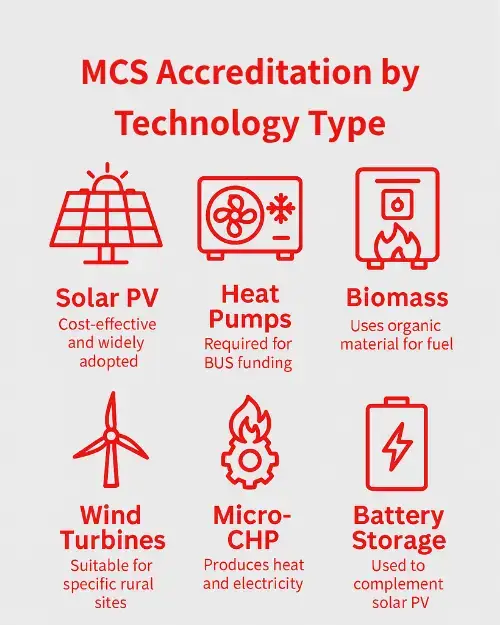
MCS accreditation applies to a range of renewable and low-carbon technologies, not just solar panels and heat pumps. Whether you’re installing systems for domestic customers or commercial projects, MCS certification helps demonstrate your technical competence and regulatory compliance. Below, we explore each eligible technology and how Brighter Compliance supports you through the process.
MCS Accreditation for Solar Installers
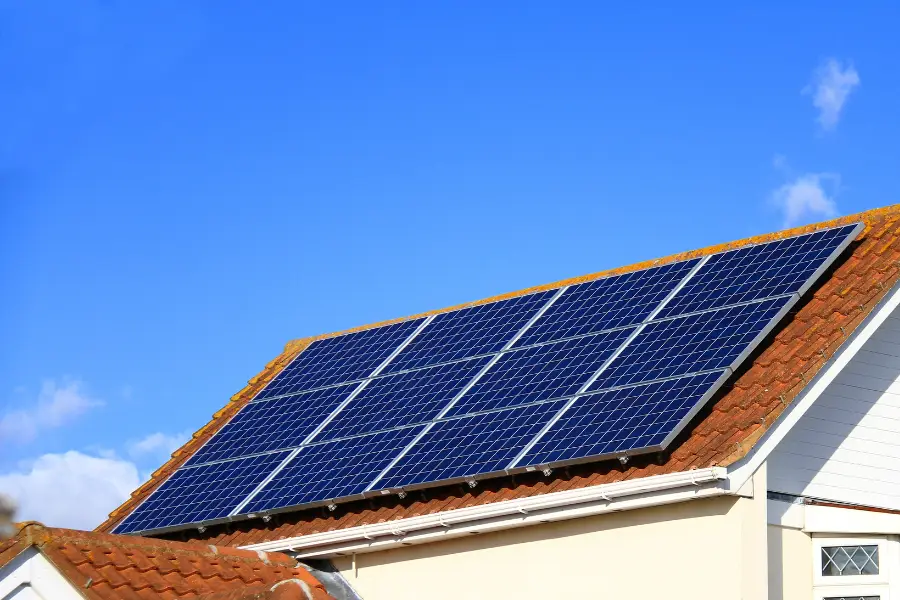
Solar PV remains one of the most accessible renewable technologies for UK homeowners and businesses. MCS accreditation is a key requirement for professional solar installers.
- Confirms eligibility for VAT relief and Smart Export Guarantee (SEG)
- Assures customers that your installation meets industry-leading standards
MCS Accreditation for Heat Pumps
The UK’s shift toward low-carbon heating makes heat pump installation a booming area of opportunity. MCS accreditation is essential for businesses looking to deliver these solutions.
- Required for access to the Boiler Upgrade Scheme (BUS)
- Aligns with government strategy to phase out fossil fuel heating
MCS Accreditation for Biomass Boilers and Stoves
Biomass systems offer a renewable heating solution using organic fuels like wood pellets, logs, or chips. MCS certification confirms that your system meets efficiency and emission standards.
- Suitable for off-grid, rural, or agricultural settings
- Must comply with air quality regulations and fuel sustainability criteria
MCS Accreditation for Wind Turbines
Small-scale wind energy systems can be a viable renewable solution in certain UK regions, particularly in open, rural landscapes. MCS accreditation is essential to demonstrate safety, reliability, and output performance.
- Requires use of MCS-approved wind turbines
- Must meet planning and noise assessment guidelines
MCS and Battery Storage Integration
While battery storage isn’t directly covered by MCS as a standalone technology, it often complements MCS-certified solar PV systems. Having battery systems professionally installed alongside certified solar technology enhances the overall value proposition.
- Increases energy independence and reduces grid reliance
- Helps customers optimise solar generation through storage solutions
MCS Accreditation for Micro-CHP (Combined Heat and Power)
Micro-CHP systems generate both heat and electricity from a single fuel source, typically natural gas. Though a niche market, these systems offer high efficiency and are covered under MCS for qualifying applications.
- Provides simultaneous generation of heat and power
- Ideal for buildings with high, constant heat demand (e.g. care homes, schools)
MCS Accreditation Cost
The cost of obtaining MCS accreditation can vary depending on several factors, including the size of your business, the range of technologies you offer, and how much of the required infrastructure you already have in place. While it is an investment, the long-term commercial and reputational benefits often make it worthwhile.
Typical costs include:
-
Application fees – Charged by the certification body to initiate the process
-
Audit and assessment fees – Cover the on-site evaluation of your systems and processes
-
Consultancy support (optional but highly recommended) – Helps ensure you meet all requirements efficiently and pass the audit first time
Brighter Compliance can help you reduce overall costs by identifying gaps early and guiding you through a streamlined, compliant certification process.
How to Check an MCS Certification
To verify an MCS certificate, customers and stakeholders can access the public database via the official MCS website.
- Use the MCS find an installer search to confirm registration
- Look up accreditation numbers and valid company details
Additional MCS Topics
MCS Accreditation Bodies
UKAS-accredited certification bodies carry out assessments. Brighter Compliance can recommend and liaise with appropriate bodies to suit your business size and technology focus.
MCS Accreditation Number
Once approved, your business will receive a unique accreditation number used to verify your status and appear on the public installer list.
MCS Accreditation List
A list of certified installers and products is available on the MCS website.
Frequently Asked Questions About MCS Accreditation
What does MCS stand for?
MCS stands for Microgeneration Certification Scheme. It is a UK quality assurance standard for renewable energy technologies such as solar PV, heat pumps, wind turbines, and biomass systems.
Who needs MCS certification?
Any business or installer wishing to offer government-backed incentives (like the Smart Export Guarantee or Boiler Upgrade Scheme) must be MCS certified. It applies to installers of renewable technologies for both domestic and small-scale commercial projects.
How long does it take to get MCS accredited?
The MCS certification process typically takes 4–12 weeks, depending on your company’s readiness, documentation, and chosen certification body.
What is the difference between MCS and PAS 2030?
MCS focuses on the installation and performance of renewable technologies, while PAS 2030 relates to energy efficiency retrofit measures under schemes like ECO (Energy Company Obligation). Many businesses pursue both for full coverage of low-carbon and retrofit services.
Can I get MCS certified as a sole trader?
Yes, sole traders can become MCS certified if they meet the necessary technical requirements and quality management standards.

Conclusion
MCS accreditation is more than just a compliance checkbox—it’s a strategic asset that strengthens your credibility, broadens your service offerings, and aligns your business with the UK’s clean energy goals. As demand for renewable technologies grows, certified installers will be at the forefront of this transition, winning customer trust and accessing valuable funding streams.
Whether you’re working with solar PV, heat pumps, biomass systems, or emerging technologies like battery storage and micro-CHP, MCS certification provides the foundation for safe, reliable, and recognised installation work.
At Brighter Compliance, we specialise in helping businesses navigate the full MCS journey—from readiness assessment to successful certification and beyond. With tailored support, industry insight, and a hands-on approach, we ensure your business is prepared, compliant, and positioned to grow in the renewable energy sector.