

Is Hybrid Working Increasing Legionella Risks in Commercial Buildings This Autumn?
As offices switch their heating back on and hybrid working continues to change how commercial spaces are used, could your building’s water systems be creating a hidden compliance risk?
Autumn is here, temperatures are dropping, and across the UK, commercial buildings are preparing for another winter. Central heating systems are being switched back on, offices are getting warmer, and facilities teams are turning their attention to seasonal maintenance. With hybrid working changing how offices are used, legionella risks in commercial buildings are becoming an important consideration for facilities managers, landlords and business owners. Reduced occupancy can mean water outlets are used less frequently, increasing the potential for stagnation and bacterial growth.
But there’s one area of property compliance that can easily be overlooked: legionella risk in hot and cold water systems.
With hybrid working now a regular part of office life, many commercial buildings simply aren’t being used in the same way they once were. Meeting rooms sit empty, entire floors may only be occupied a few days a week, and taps, showers and other water outlets can go unused for extended periods.
While this might seem harmless, reduced water usage can create conditions that encourage legionella bacteria to multiply.
So, as we head into the colder months, is now the right time to review your building’s water safety?
How Is Hybrid Working Increasing Legionella Risks in Commercial Buildings?
Think about how your office operated five or six years ago.
Most desks were occupied throughout the working week, kitchens were regularly used, and toilets and washrooms experienced consistent footfall.
Fast forward to today, and things can look very different.
Many businesses have adopted hybrid working arrangements, with employees splitting their time between home and the office. Hot desking, reduced occupancy and unused office areas have become increasingly common.
Although these changes offer flexibility, they can also affect how water moves through a building.
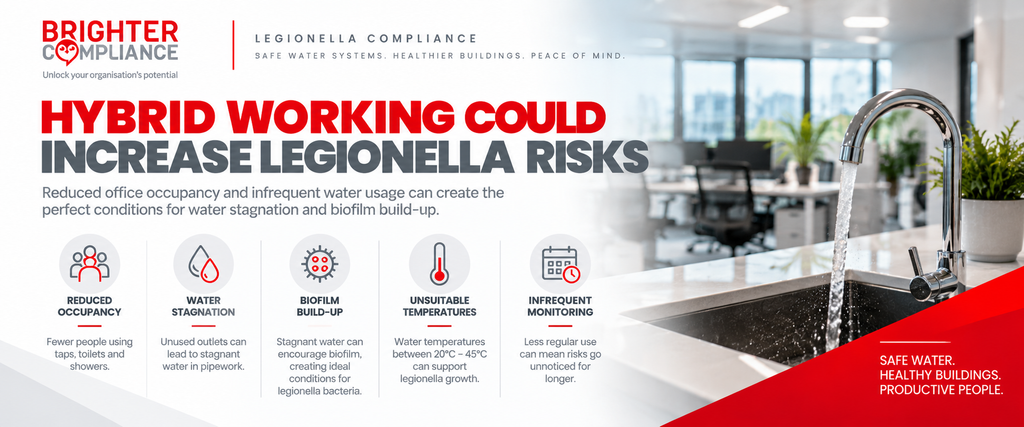
When taps, showers and other outlets aren’t used regularly, water can stagnate within the pipework.
Stagnant water, particularly when combined with unsuitable temperatures, can encourage the development of biofilm and create favourable conditions for legionella bacteria.
This means that even a well-maintained commercial property could develop new risks if its water systems are no longer being used as originally intended.
And importantly, these risks aren’t always visible.
Why Does Legionella Need Particular Attention During Autumn and Winter?
Although legionella is often associated with warmer weather, legionella risks in commercial buildings can remain a concern throughout autumn and winter. Changes in building temperatures, reduced water usage and inadequate monitoring can all contribute to conditions that support bacterial growth.
Legionella is not exclusively a summer problem.
Although warmer weather can contribute to increased water temperatures, legionella risks can exist throughout the year wherever water systems provide suitable conditions for bacterial growth.
As autumn arrives, facilities managers should pay particular attention to how their buildings are being operated.
1. Central Heating and Changes in Water Temperature
Switching on the office heating doesn’t directly create legionella, but changes in building temperatures can affect water systems.
For example, poorly insulated cold water pipework running through heated areas may become warmer than intended.
Legionella bacteria can multiply in water temperatures between approximately 20°C and 45°C, making effective temperature control an important part of prevention.
2. Reduced Office Occupancy
Hybrid working can mean certain outlets are only used once or twice a week, while others may remain untouched for much longer.
Without regular water movement, stagnation can develop in sections of the system.
This is particularly relevant for larger commercial properties, shared office buildings and premises with multiple floors or infrequently occupied areas.
3. Hidden Biofilm Build-Up
When water remains stagnant, conditions may encourage biofilm to develop inside pipework.
Biofilm is a layer of microorganisms that can attach to surfaces within water systems and provide an environment where legionella bacteria may persist.
Combined with inadequate temperature control, this can make managing water hygiene more challenging.
4. Changes to Building Usage
Perhaps your business has downsized, introduced hot desking or stopped using certain areas of the building altogether.
These changes can affect the original assumptions made within your legionella risk assessment.
If your building is being used differently, your water safety arrangements may need reviewing too.
What Temperatures Should Commercial Water Systems Be Maintained At?
One of the most important elements of legionella prevention is ensuring hot and cold water systems are operating at appropriate temperatures.
According to the Health and Safety Executive’s guidance on hot and cold water systems, maintaining appropriate water temperatures and regularly monitoring outlets are essential parts of effective legionella control:
| Water system | Recommended temperature |
| Cold water | Below 20°C where possible |
| Hot water storage | At least 60°C |
| Hot water outlets | At least 50°C within one minute (55°C in healthcare premises) |
Regular monitoring helps identify potential issues before they become more serious.
However, temperature monitoring alone isn’t always enough. Water usage, pipework condition, system design and appropriate maintenance all contribute to effective legionella control.
For commercial properties with reduced occupancy, it’s particularly important to ensure that infrequently used outlets are included within a suitable flushing programme.
Five Signs Your Commercial Property May Need a Legionella Risk Assessment Review
Understanding legionella risks in commercial buildings starts with recognising how changes in occupancy, water usage and building management can affect your existing control measures.
Not sure whether your existing legionella arrangements are still suitable?
Here are five questions worth asking this autumn.
1. Has your office occupancy changed?
If fewer people are regularly using the building, your water usage patterns may have changed significantly.
2. Are certain taps or showers rarely used?
Infrequently used outlets can increase the potential for water stagnation, particularly where no flushing arrangements are in place.
3. Are your water temperatures being monitored?
Regular temperature checks and accurate records help demonstrate that your control measures are working effectively.
4. Have there been changes to your building or water systems?
Refurbishments, changes in floor layouts, redundant pipework or altered building usage may introduce new risks that weren’t covered in previous assessments.
5. When was your legionella risk assessment last reviewed?
There isn’t a universal legal requirement to renew every legionella risk assessment annually. However, assessments should be reviewed regularly and whenever changes suggest that existing controls may no longer be suitable.
The HSE recommends regularly reviewing legionella risk assessments and control measures to ensure they remain effective, particularly when changes occur within a building or its water systems.
If any of these questions raise concerns, it could be time to take a closer look at your water hygiene arrangements.
Who Is Responsible for Managing Legionella Risks in Commercial Buildings?
Under UK health and safety legislation, employers and those in control of premises have responsibilities to identify, assess and manage the risks associated with legionella bacteria.
This can include commercial landlords, managing agents, facilities managers and business owners, depending on their responsibilities and control over the premises.
The HSE’s Approved Code of Practice L8 provides guidance for employers, landlords and those responsible for managing premises, covering risk assessments, control measures and ongoing monitoring.
For commercial property teams, effective compliance generally involves:
- Having a suitable and sufficient legionella risk assessment.
- Identifying who is responsible for managing water safety.
- Implementing appropriate control measures.
- Monitoring water temperatures and system conditions.
- Managing infrequently used outlets.
- Keeping appropriate records and reviewing arrangements when circumstances change.
It’s not simply about having a risk assessment document on file. It’s about making sure the controls reflect how your building is actually being used.
How Brighter Compliance Can Help
At Brighter Compliance, we help businesses, commercial landlords and facilities managers identify and manage legionella risks in commercial buildings. From offices and shared workspaces to larger commercial property portfolios, our practical risk assessments and compliance support help you understand your responsibilities and take appropriate action.
Our team supports businesses, landlords and property managers with practical legionella compliance services, helping you understand your responsibilities and identify areas requiring attention.
Whether you’re managing a single office or a portfolio of commercial properties, we can support you with:
Legionella Risk Assessments
Identifying potential risks within your hot and cold water systems and providing clear recommendations to support effective management.
Water Hygiene and Compliance Support
Helping you understand the measures needed to maintain safe water systems and meet your compliance responsibilities.
Commercial Property Compliance
Supporting your wider building compliance requirements, including fire safety, health and safety and asset management.
We focus on making compliance straightforward, with practical advice that helps businesses take the right action.
Don’t Let Reduced Office Footfall Create an Overlooked Compliance Risk
Hybrid working might have changed the way we use commercial buildings, but the responsibility to manage water safety remains.
As heating systems come back into use and offices prepare for the winter months, now is a sensible time to check whether your existing legionella controls still reflect how your property operates.
A proactive review could help identify infrequently used outlets, unsuitable water temperatures or gaps in monitoring before they become bigger problems.
Managing legionella risks in commercial buildings doesn’t have to be complicated. With the right risk assessment, regular monitoring and appropriate control measures, you can help protect building occupants and maintain your compliance responsibilities throughout the year.
Is your commercial property ready for winter?
If you’re unsure whether your current legionella risk assessment is still suitable, Brighter Compliance can help.


